
Understanding how money evolved helps explain why modern financial systems look the way they do, why banks exist, and why digital money isn’t as strange or as new as it seems.
Money feels so natural today that it’s easy to forget it’s a human invention that has changed repeatedly as societies have grown more complex. Each stage of money’s evolution solved a problem created by the stage before it. From swapping goods face-to-face to tapping phones and moving invisible digits, money’s story is really about trust, efficiency, and coordination at scale.
Barter: The Limits of Direct Exchange
Early economies relied on barter: trading goods or services directly. If you had grain and needed shoes, you found someone who had shoes and wanted grain. This system worked in small communities with limited specialization, but it quickly ran into problems as societies grew.
The biggest issue was the “double coincidence of wants.” Both parties had to want what the other offered at the same time. If the shoemaker didn’t need grain, the trade stalled. Barter also made value comparisons difficult. How many eggs equal a cow? There was no consistent unit of measurement.
As trade expanded beyond neighbors and villages, barter became too slow and imprecise. People needed something portable, divisible, and widely accepted.
Explore What ‘The Economy’ Actually Is for big-picture economic basics.
Commodity Money: Objects That Held Shared Value
To address barter’s limitations, societies began using commodity money, which is an object with recognized value in its own right. Shells, salt, cattle, and eventually metals became common mediums of exchange. These items were durable, scarce, and broadly desirable.
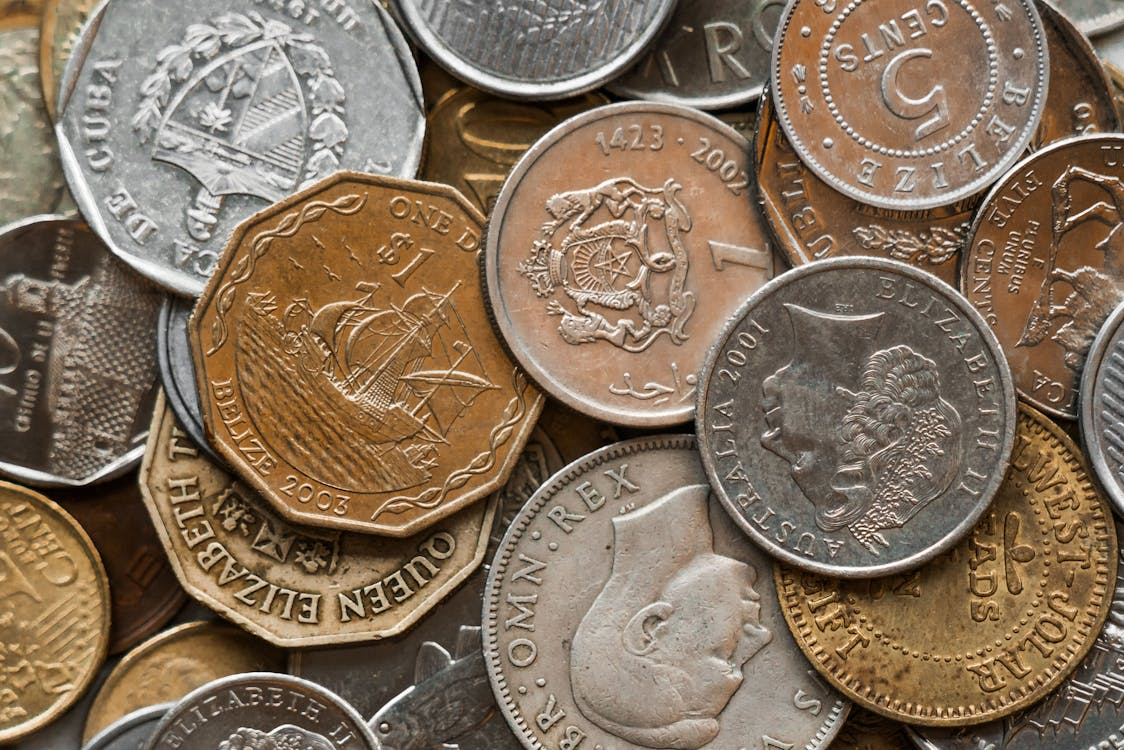
Metal coins marked a significant leap forward. They standardized value, simplified pricing, and enabled long-distance trade. A coin’s worth was tied to its material content, which made trust easier. You didn’t need to know the seller personally; the coin itself carried credibility.
However, commodity money still had drawbacks. Carrying large amounts was risky and inconvenient. Verifying purity and weight required expertise. As economies scaled further, even metal-based systems struggled to keep up.
Read How Credit Cards Make Money (And How To Win At Them) for modern payment incentives.
Banking and Paper Money: Trust Becomes Centralized
Banks emerged as institutions that stored valuables securely and issued receipts. Over time, those receipts became paper money. Instead of exchanging gold directly, people exchanged claims to gold. This shift made transactions lighter, faster, and safer.
Eventually, paper money became detached from physical commodities altogether. Governments declared it legal tender, meaning it had value because the state said so and because people collectively accepted it. This is known as fiat money.
Banking systems expanded credit, enabling economic growth by allowing people and businesses to spend money they didn’t yet have, based on expected future income. While this fueled innovation, it also introduced new risks, such as debt bubbles and financial crises.
Check out How Credit Scores Actually Work for modern trust signals.
Digital Money: Numbers Replace Physical Objects
As computers entered finance, money became increasingly abstract. Paychecks turned into direct deposits. Purchases became card swipes. Most modern money now exists only as numbers in databases, moving between accounts electronically.
This shift increased speed and convenience but also distanced people from the physical sense of spending. Money became easier to move and easier to overspend. At the same time, digital systems allowed global transactions that would have been impossible with physical cash.
Newer forms of digital money, including mobile payments and cryptocurrencies, represent attempts to further decentralize financial trust. While their long-term role is still evolving, they follow the same pattern as earlier transitions: solving problems created by existing systems.
See What Blockchain Actually Is (Without Hype) for context on digital money.
What Each Stage Reveals About Money
Across history, money evolved not because people wanted novelty, but because they needed coordination. Each system balanced trust, convenience, and control differently. Barter relied on personal relationships. Commodity money relied on shared value. Banking relied on institutions. Digital money relies on networks and software.
None of these stages entirely replaced the previous ones overnight. Old systems often coexist with new ones. Cash still exists. Barter still happens informally. Digital money is simply the latest layer.
Money’s evolution shows that it isn’t just about wealth. It’s about how societies organize cooperation at scale.