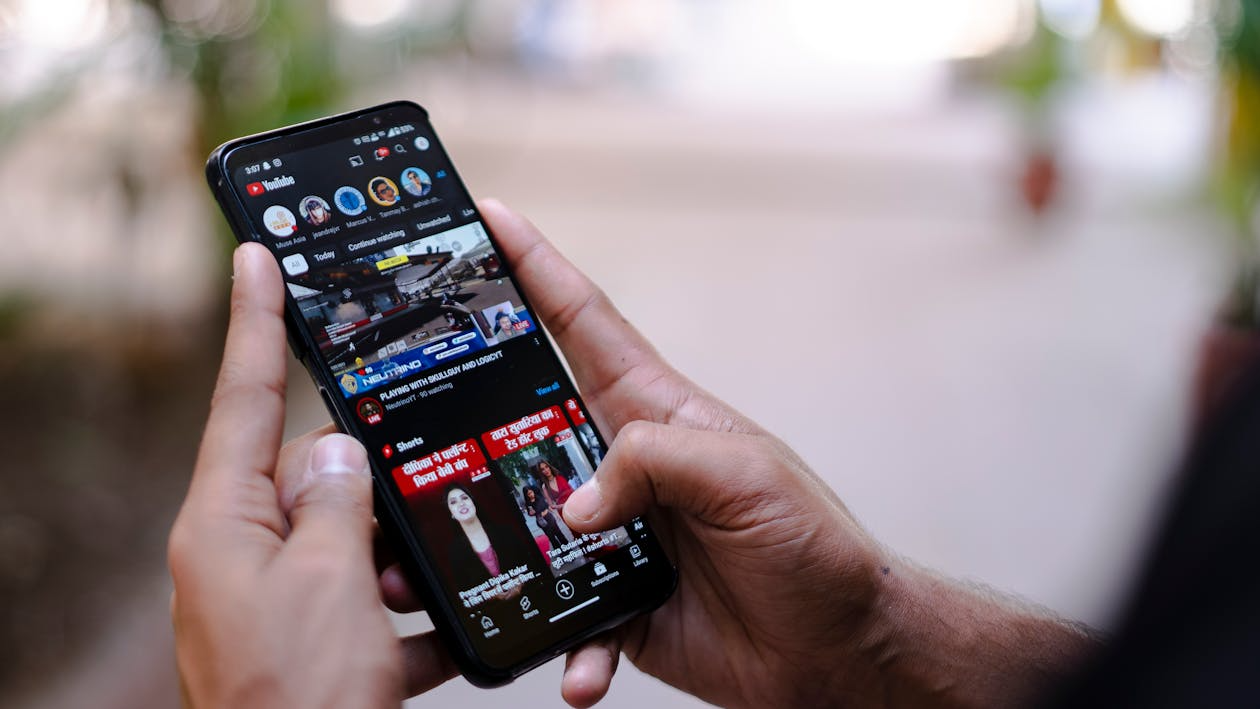
Understanding how streaming works makes those hiccups far less mysterious. Streaming feels effortless. You tap play, and music or video starts almost instantly. There are no downloads or waiting.
However, that smooth experience depends on a careful balancing act between compression, buffering, internet speed, and device capability. When something goes wrong, such as blurry video or sudden pauses, it’s usually because one part of that system is struggling to keep up.
What Streaming Actually Is
Streaming means receiving media in small pieces in real time, rather than downloading the entire file before playback. Your device starts playing as soon as it has enough data to keep up with what you’re watching or listening to.
Those pieces are sent continuously from a server to your device. As long as new data arrives faster than it’s being consumed, playback feels seamless. If delivery slows down, the experience degrades.
This approach allows instant access but makes streaming sensitive to network conditions in a way downloads are not.
Explore How The Internet Works (In Plain English) to see how streaming data travels online.
Why Compression Is Necessary
Raw video and audio files are enormous. Streaming them without compression would overwhelm most internet connections. Compression reduces file size by removing information that the human eye or ear is less likely to notice.
Different compression methods balance quality and efficiency. Higher compression uses less data but can introduce visual artifacts or dull audio. Lower compression preserves quality but demands faster connections.
Streaming services constantly adjust compression based on your connection. That’s why quality may change mid-video without you touching any settings.
See What The Cloud Means (And Where Your Data Lives) for where streaming files reside.
How Buffering Prevents Pauses
Buffering is not a failure; it’s a protective mechanism. Your device stores a short reserve of upcoming data so playback can continue smoothly if the connection briefly slows.
When the buffer empties faster than it refills, playback pauses. The spinning wheel isn’t waiting for the video to exist; it’s waiting for enough data to rebuild that safety margin.
A stable buffer depends on consistent speed, not just high peak speed. Short bandwidth drops can cause interruptions even on fast connections.
Why Video Sometimes Looks Blurry
Blurry video usually means the stream has dropped to a lower resolution to keep playing. When bandwidth decreases, streaming services prioritize continuity over clarity.
Resolution determines how much detail fits on the screen. Higher resolutions require more data per second. If your connection can’t keep up, the service switches to fewer pixels to avoid buffering.
Once bandwidth improves, resolution increases again. This constant adjustment is automatic and invisible, except when quality changes are noticeable.
Check out How Subscriptions Trap You (And How To Escape) to understand streaming platform models.
What Affects Streaming Quality Most
Internet speed matters, but consistency matters more. Shared networks, background downloads, and multiple devices streaming at once reduce available bandwidth.
Distance from the server can also play a role. Content delivered from nearby servers loads faster and more reliably. This is why streaming platforms use global networks to place data closer to users.
Your device itself matters too. Older hardware may struggle to decode high-resolution streams even with a strong internet connection.
Read How GPS Knows Where You Are to understand location and signal systems.
How to Improve Streaming Performance
Simple changes often make a big difference. Reducing the number of active devices on a network improves consistency. Using wired connections instead of Wi-Fi can eliminate interference.
Lowering resolution manually can stabilize playback when connections fluctuate. Updating apps and devices improves decoding efficiency and reduces bugs.
Most streaming problems aren’t permanent. They’re temporary mismatches between demand and delivery.
Why Streaming Feels Fragile
Streaming works by staying just ahead of the present moment. There’s no safety net beyond the buffer. When conditions change, quality adapts instantly.
That fragility is also its strength. It allows immediate access to massive libraries without storing files locally. Once you understand the tradeoff, streaming behavior feels logical rather than frustrating.