Understanding what the economy actually is helps make sense of why headlines sometimes feel disconnected from personal experience and why both can be true at the same time.
People hear about “the economy” constantly, but the term often feels abstract and disconnected from daily life. News reports talk about growth, downturns, and confidence as if the economy were a single machine running somewhere in the background. In reality, the economy is not a thing you can point to. It’s a system made up of millions of individual decisions happening every day.
The Economy as a Web of Everyday Activity
At its core, the economy is the total of how people produce, exchange, and consume goods and services. When someone works, buys groceries, pays rent, or saves money, they are participating in the economy. There is no central control panel. The system emerges from countless interactions between individuals, businesses, and governments.
Because the economy is decentralized, it can behave in ways that feel unpredictable. When many people act similarly, by spending less, hiring more, and borrowing cautiously, the collective effect becomes visible in national statistics. These patterns are what economists try to measure.
The economy isn’t separate from real life. It is real life, viewed at scale.
Explore How Money Evolved: Barter To Banks To Digital for historical context on exchange.
GDP: Measuring Output, Not Well-Being
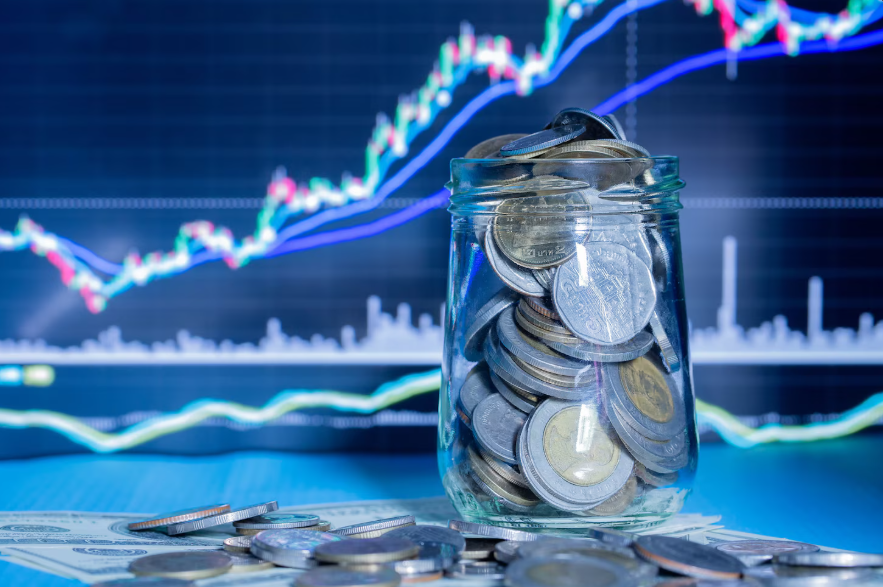
Gross Domestic Product, or GDP, is one of the most commonly cited economic indicators. It measures the total value of goods and services produced within a country over a given period. When GDP rises, it usually signals increased economic activity.
However, GDP is often misunderstood as a measure of prosperity or happiness. It isn’t. GDP can grow even if inequality increases or environmental damage worsens. It counts spending, not outcomes. A costly disaster can boost GDP through rebuilding, even as overall well-being declines.
GDP helps understand production levels and economic momentum, but it doesn’t tell the whole story of how people are actually doing.
See What ‘Net Worth’ Really Means for context on personal finance.
Unemployment: More Than a Single Number
The unemployment rate tracks the number of people actively looking for work but can’t find it. It’s a key signal of economic health because jobs connect income, stability, and spending power.
Still, unemployment statistics have limits. They don’t include people who stopped looking for work or those working fewer hours than they want. A low unemployment rate doesn’t always mean jobs are good or wages are rising.
This is why employment data is often paired with other measures. The job market’s health depends not just on how many people are working, but on the quality and security of that work.
Read How Taxes Work For Regular People for income and policy context.
Consumer Confidence: How People Feel Shapes What Happens
Consumer confidence reflects how optimistic or pessimistic people feel about their financial future. This matters because feelings influence behavior. When people feel secure, they spend more. When they feel uncertain, they save more.
These shifts can become self-reinforcing. If many people cut back on spending at once, businesses earn less and may reduce hiring or investment, further slowing the economy. Confidence doesn’t just reflect conditions; it helps create them.
This is why economic news can influence reality. Headlines shape expectations, and expectations shape decisions.
Check out What “Inflation” Means In Real Life for everyday price impacts.
How It All Connects to Daily Life
Economic indicators are simplified signals trying to describe a complex system. GDP might rise while individual households struggle. Unemployment might be low while costs feel unmanageable. These contradictions aren’t errors; they reflect averages hiding variation.
For individuals, the economy shows up as job opportunities, prices, interest rates, and financial stress or relief. Understanding the system helps people interpret news without overreacting to single data points.
The economy isn’t a scoreboard. It’s a snapshot of shared activity, constantly changing as people adapt to their circumstances.