
Understanding how the grid works explains why outages occur, why power demand matters, and why energy discussions often sound more complicated than they are.
Electricity feels simple from the user side. You flip a switch, and the lights come on. But behind that moment is one of the largest and most complex systems humans have ever built. The electric grid is a constantly balanced network that must generate, transmit, and deliver power in real time, because large-scale electricity cannot be easily stored.
Electricity Has To Be Made Before You Use It
Electricity does not exist naturally in a usable form. It must be generated. Power plants create electricity by spinning turbines, usually with steam, water, wind, or combustion. Coal, natural gas, nuclear, hydroelectric, wind, and solar plants all feed energy into the same grid.
What matters most is timing. Electricity is produced at the exact moment it’s consumed. If supply and demand become imbalanced, the system becomes unstable. Too much demand can cause voltage drops or shutdowns. Too much supply can damage equipment.
Grid operators constantly adjust output to match usage, second by second, across entire regions.
Explore How Water Gets To Your Faucet for another hidden infrastructure system.
Transmission Moves Power Long Distances
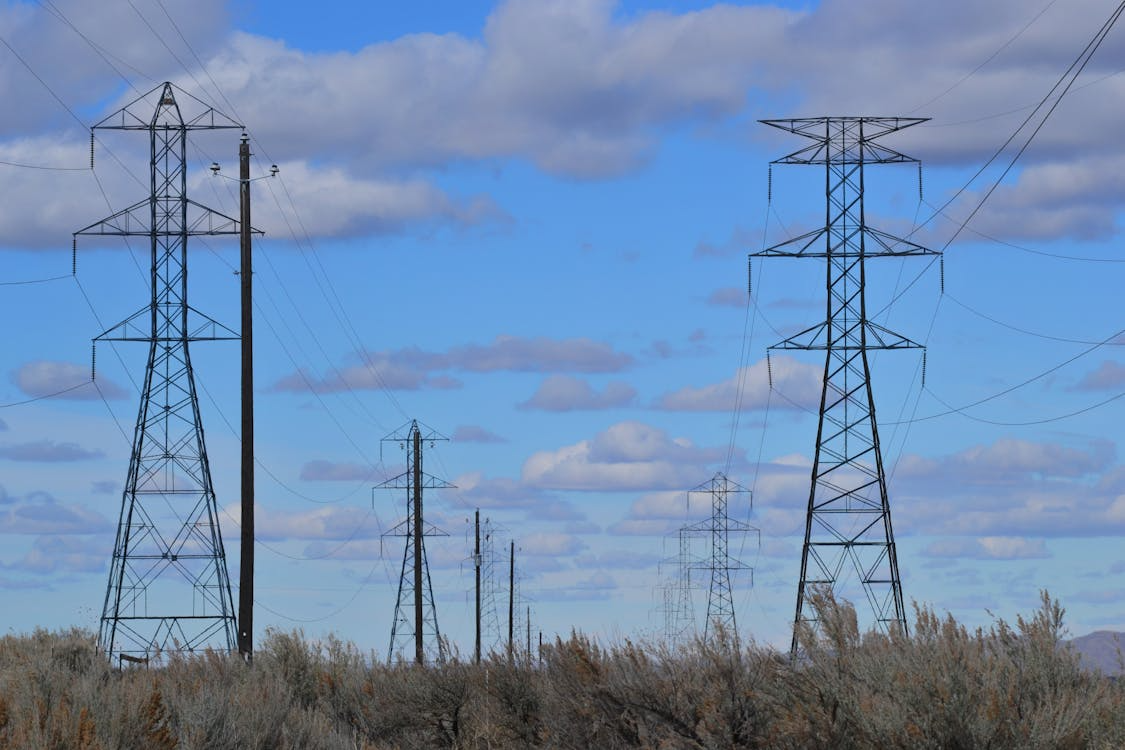
Once electricity is generated, it travels through high-voltage transmission lines. These lines efficiently transmit power over long distances, often from remote power plants to population centers.
High voltage reduces energy loss during transport. Substations along the way step up or down the voltage depending on where the power is headed. This part of the grid is often what people picture when they think of large towers and long cables.
Transmission networks connect states and regions, allowing power sharing during shortages but also increasing the likelihood of cascading failures if not carefully controlled.
Distribution Delivers Power To Homes And Businesses
After electricity reaches local areas, it enters the distribution system. This is the lower-voltage network that brings power directly to neighborhoods, buildings, and individual homes.
Transformers on poles or underground reduce voltage to safe levels for everyday use. From there, electricity flows through service lines into breakers, outlets, and appliances.
Most outages people experience happen at this level, caused by storms, accidents, aging equipment, or maintenance work. While generation problems make headlines, distribution failures are far more common.
See How Governments Make Laws (In Plain English) for large-scale system coordination.
Why Blackouts And Brownouts Happen
Blackouts occur when power is completely cut off. Brownouts happen when voltage drops, but electricity still flows at reduced strength. Both are safety mechanisms as much as failures.
If demand spikes suddenly, such as during heat waves when air conditioners run nonstop, the grid may not keep up. To prevent widespread damage, operators may intentionally cut power in certain areas.
The weather is a significant factor. Heat strains equipment. Cold increases demand, and storms damage lines. The grid is resilient, but not invincible.
Read Why Batteries Degrade Over Time for energy storage limitations.
What “Peak Demand” Really Means
Peak demand refers to the highest level of electricity use during a given period. Utilities must build systems capable of handling these peaks, even if they occur only a few days a year.
This is why grids often rely on backup power plants that sit idle most of the time. It’s also why energy efficiency and off-peak usage matter more than people realize.
Using electricity at different times, such as running appliances at night, helps smooth demand and reduces stress on the system.
Check out What ‘The Economy’ Actually Is for supply and demand basics.
The Grid Is A Balancing Act, Not A Battery
A common misconception is that the grid stores electricity like a giant battery. It doesn’t. While small-scale storage exists, most electricity flows directly from the generator to the user.
This makes the grid a live system that must be actively managed. Every new power source, electric vehicle, or heat wave adds to the complexity of that balance.
When people talk about “the grid,” they’re talking about an ongoing coordination effort that works quietly until something disrupts it.
Understanding the grid doesn’t require engineering knowledge. It requires recognizing that electricity is a real-time service, not a static resource. That awareness explains much of what happens when power becomes unreliable.