
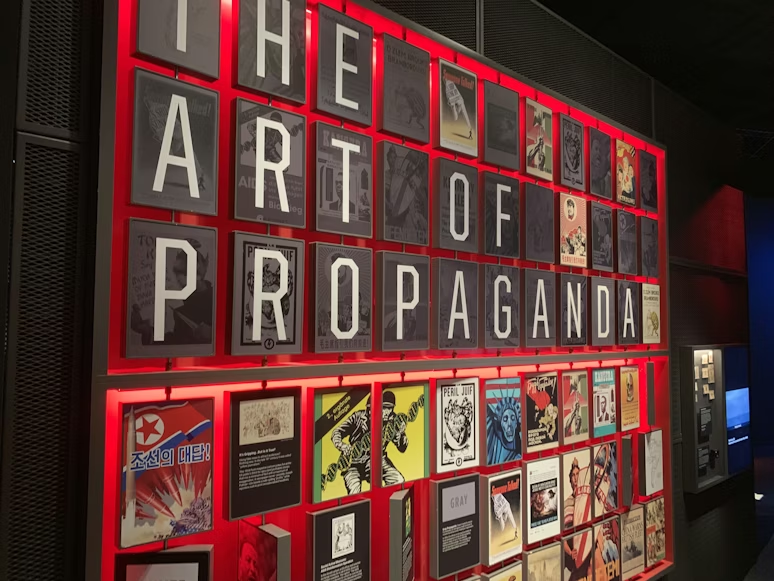
Propaganda hasn’t disappeared; it has adapted. Modern propaganda techniques no longer command belief directly. Instead, they nudge perception quietly, shaping what feels obvious, dangerous, or morally urgent without asking for conscious agreement.
When people hear the word “propaganda,” they often picture old posters, wartime slogans, or government broadcasts from the past. Modern propaganda rarely looks like that. Today, it blends seamlessly into news feeds, entertainment, memes, and influencer content. It doesn’t announce itself. It feels familiar, emotional, and often reasonable on the surface.
Propaganda Is About Emotion, Not Information
Modern propaganda works by activating emotion before thought. Fear, anger, pride, resentment, and moral outrage are powerful motivators, and content that triggers them spreads faster than a calm explanation.
This doesn’t mean the information presented is always false. Propaganda often uses selective truth. Real facts are framed in ways that exaggerate threats, simplify blame, or imply intent where none has been proven.
Once emotion is engaged, critical thinking slows. The message doesn’t need to be logically convincing; it only needs to feel right.
Explore The Psychology Of Fear In Media for how emotional triggers drive engagement.
Simplification And Binary Framing
A common technique in modern propaganda is to reduce complex issues to binary choices. Good versus evil. Us versus them. Safe versus dangerous. Loyal versus traitorous.
This framing removes nuance and discourages questions. If only two sides exist, disagreement becomes moral failure rather than analytical difference.
Binary framing is especially effective online because it rewards certainty. Clear villains and heroes generate engagement, while ambiguity feels unsatisfying and is often ignored.
Read The Difference Between Fact, Opinion, And Interpretation for clearer thinking frameworks.
Repetition Creates Familiarity
Propaganda doesn’t rely on a single message. It depends on repetition across multiple channels. When the same idea appears in headlines, videos, comments, jokes, and social posts, it starts to feel true simply because it’s familiar.
This effect is subtle. People rarely remember where they first heard an idea. They only know they’ve listened to it many times. Familiarity reduces skepticism and increases acceptance.
Algorithms amplify this effect by showing users similar content repeatedly, reinforcing the same narratives from slightly different angles.
See How Algorithms Decide What You See for why patterns keep repeating.
Identity And Belonging As Tools
Modern propaganda often attaches beliefs to identity. Agreeing with a message becomes part of belonging to a group. Disagreeing feels like betrayal.
This approach is powerful because humans are social creatures. The fear of exclusion can override evidence. Messages framed as “people like us know this” discourage independent evaluation.
Online communities intensify this dynamic. Likes, shares, and comments publicly signal loyalty, rewarding conformity and punishing doubt.
Modern Examples Without Labels
Today’s propaganda doesn’t need official sponsors. It can spread through memes, viral clips, selectively edited footage, or emotionally loaded headlines.
Influencers, anonymous accounts, and partisan outlets can all act as carriers, intentionally or not. Some content is designed to mislead. Other content spreads simply because it performs well emotionally.
The defining feature is not who creates it, but how it functions: Does it simplify, polarize, and emotionally steer without encouraging understanding?
Check out How To Evaluate Sources Online for practical verification habits.
How To Spot It Without Becoming Cynical
Not all persuasive content is propaganda. The goal isn’t distrust; it’s awareness. Asking a few simple questions helps distinguish between influence and information.
Does the message demand immediate emotional reaction? Or does it frame disagreement as moral failure? Does it discourage checking other sources or considering context?
Propaganda thrives when people feel overwhelmed or rushed. Slowing down weakens its effect. Curiosity is a better defense than suspicion.
Modern propaganda succeeds by blending in. Recognizing its techniques restores choice. You don’t need to reject every message; you need to notice when emotion is being used to steer understanding instead of deepen it.